


Wilsonville LED Lighting Project
Phase IV: Light Fixture Conversions in Villebois & at SignaliZED Intersections
Project Overview
The City of Wilsonville is in the midst of a multi-year project to replace high-pressure sodium (HPS) streetlights with energy-efficient Light Emitting Diode (LED) lighting, which saves money, requires less maintenance and provides greater sustainability for the community.
Phase 4 of the LED Fixture Conversion project is converting more than 400 residential street lights in the Villebois neighborhood as well as lights at signalized intersections throughout Wilsonville.
Schedule / Real-Time Installation Updates
Phase 4 of the project is replacing lights located at signalized intersections as well as more than 400 streetlights located within Villebois. This work is scheduled to take place February-April 2026. The current phase includes lights within southern portions of Villebois; those Villebois fixtures not replaced during this phase are scheduled for conversion next year. Work begins Feb. 9 in Villebois. Residents are asked to avoid parking where no parking signs are posted.
All installation dates are estimated. Installer may move into other areas sooner than projected as time and materials allow. The project map may be adjusted to reflect changes as time allows.
-
Click Here for a project map that illustrates Phase IV work areas & charts progress.
Why LED?
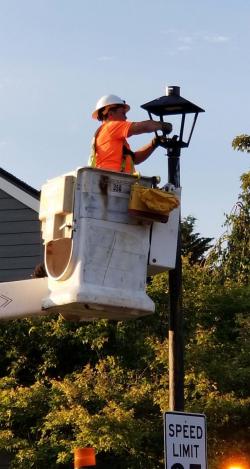 There are several ways Wilsonville can "shine" brighter by converting its fixtures.
- (S)aves money – Long-lasting LED lights have four times the lifespan as HPS lights, cutting energy and maintenance costs and saving the city money over time.
- (H)elps protect the environment – LED lights are more environmentally friendly. They give off less CO2 emissions and contain no lead or mercury.
- (I)ncreases safety and visibility – LED lights have a wide, consistent light pattern that improves visibility and reduces road glare for drivers, cyclists, and pedestrians.
- (N)ight sky friendly – LED lights are Dark Sky compliant and meet requirements to help minimize light pollution.
- (E)nergy efficient – LED lights use about 50% less energy than the older HPS lights and are more sustainable.
Replacement Fixtures Maintain Neighborhood Character
The City has taken care to maintain the existing character of our neighborhoods with this project. Lighting fixtures selected from the PGE-approved list are similar in style to the current fixtures.
Brighter, Globeless Lighting
New LED lights may appear slightly brighter than the old lights due to the color of the light emitted, which is less amber than the old fixtures and more of a warm white. They also give off a more consistent light pattern and don’t use glass globes. This ensures the fixtures are Dark Sky compliant, reducing light pollution.
New Lighting Fixture Types
Town & Country (globeless): in Charbonneau, Courtside Estates, Foxchase, Montebello, Morey’s Landing, Park at Merryfield, Rivergreen
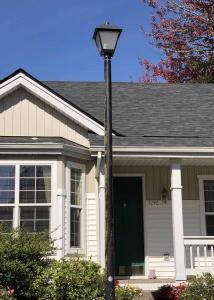
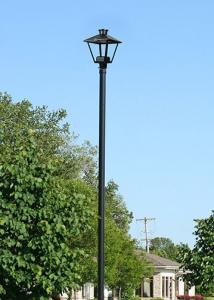
Town & Country (Existing) Town & Country (Replacement)
Acorn (globeless): in East Meadows, Montebello, Park at Merryfield, Villebois
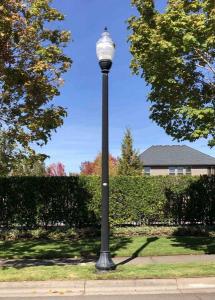
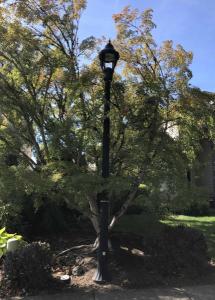
Acorn (Existing) Acorn (Replacement)
Cobrahead: in Charbonneau, Courtside Estates, Foxchase
(fixture color to match color of existing pole)
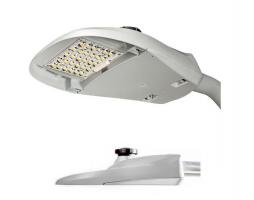
Cobrahead (Replacement)
Neighborhoods Getting Replacements In Phase 4
During Phase IV, more than 500 street lights have been identified for replacement (map), including more than 400 within Villebois. Previously, lights were converted in more mature neighborhoods with the less-efficient fixtures; these were prioritized to maximize the City's cost savings. That savings is subsidizing subsequent phases of the project.
What to Expect During Conversions in Your Neighborhood
The City's goal is to minimize any inconveniences as much as possible as crews install new LED fixtures. Prior to entering each neighborhood, the City is posting signage that prohibits parking directly in front of those streetlights being replaced.
To keep neighborhoods informed on the impacts of construction the City is taking the following steps:
- Providing timelines and projects updates on this project web page and the interactive map.
- Placing visible signage in front of light poles no more than 3 days prior to conversion.
Frequently Asked Questions
Why are streetlights being replaced?
The City is converting its streetlights to light emitting diodes (LED) to reduce energy consumption, which will provide cost savings and lower greenhouse gas emissions. LED lights are more durable and require less maintenance, which improves reliability. Additionally, LEDs provide better visibility, reduce light pollution, and improve safety.
Why are the newly-installed lights brighter?
New LED lights may appear slightly brighter than the previous High-Pressure Sodium (HPS) lights for several reasons. The first is that the HPS lights degraded over time and significantly lose 20-25% of their light output (lumen depreciation) over their lifespan. HPS become less efficient as they age, requiring more voltage to produce the same amount of light, eventually leading to failure.
Additionally, the light emitted by the LED is less amber than the old fixtures and more of a warm white, which appears brighter but is emitting the same number of lumens as the HPS lights did when they were first installed.
What happened to the glass in the fixture?
City Code requires any new lighting to be Dark Sky Compliant. Dark sky compliance involves using, shielding, and directing outdoor lighting downward to minimize light pollution, glare, and energy waste. The previous lights with glass globes or panes created refraction from the glass and were not Dark Sky Compliant. The new glassless lights direct the light toward the ground rather than to the sides or skyward.
Why is the new light whiter?
One of the key goals of lighting conversion is public safety along roadways and sidewalks. This is accomplished by designing streetlights to meet the current Illuminating Engineering Society (IES) RP-8-22 standard. RP-8-22 recommends 3000k streetlights to provide a bright, "warm white" light suitable for enhancing visibility in residential areas, often recommended for balancing safety with reduced light pollution. In contrast, amber HPS lights (2000K) offer a cozy ambiance but with lower visibility and potential energy efficiency trade-offs.
The street tree is obstructing the streetlight. Who trims that?
As part of the installation process, the City is trimming back any street trees that impede the installation of the new streetlight. Per City Code, any subsequent trimming of street trees is the responsibility of the adjacent property owner. Any requests to the City to trim trees will be forwarded to the property owner by Code Enforcement staff.
How do I report streetlights that are out?
While the City owns most of the lights within the City, PGE maintains them on our behalf. Streetlight outages can be reported online at:
https://portlandgeneral.com/outages-safety/report-a-streetlight-problem
